In shortThe Edinburgh Castle prison vaults sit beneath Crown Square, reached by short flights of steps from Foog's Gate, and the cells are presented as a reconstruction of about 1800. Pirates were held there first, then prisoners of war from 1757 to 1814. The National War Museum, the Scottish National War Memorial and the dog cemetery are all nearby. Allow time beyond the main highlights.
1757-1814prisoners of war held
6 galleriesNational War Museum
1840dog cemetery in use since
2 hourscastle's suggested minimum
Where the military corners sit on the route
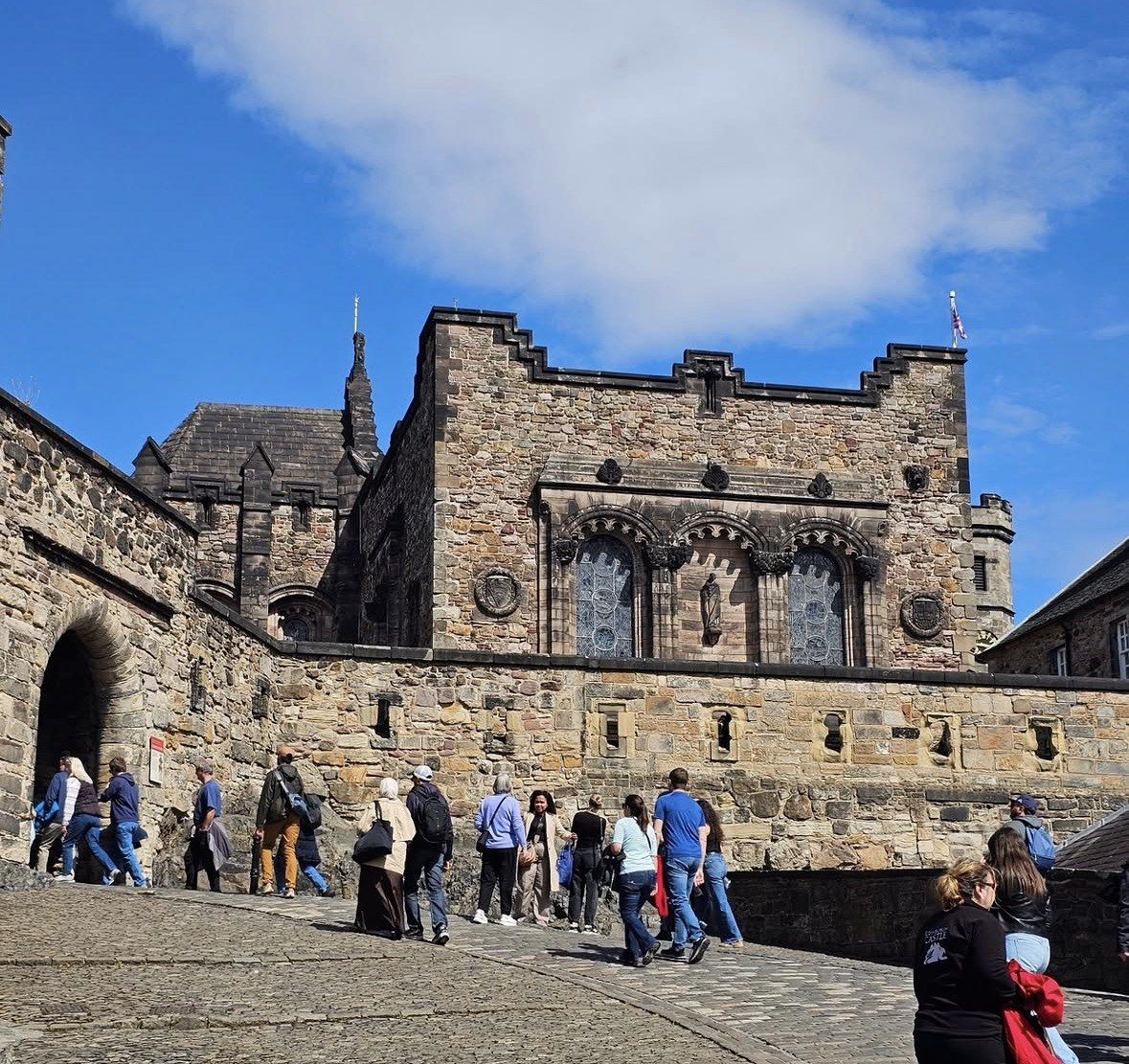
Four stops make up this side of the castle, and they are spread across the upper part of the rock rather than gathered under one roof. The vaults run beneath Crown Square. Directly above them, the Scottish National War Memorial takes up one side of that same square. The National War Museum sits further round, in a long low building that was never designed for visitors, and the dog cemetery is a small plot you look down into from the walls above it.
None of the four is on the way to anything else, which is why people run out of time. The two-hour minimum published by Historic Environment Scotland, the registered Scottish charity behind the castle (SC045925), already has the museums and the vaults inside it. Add an hour on top if the military side is why you came.
| Stop | How you reach it | What it is |
|---|
| Prisons of War vaults | Steps down from Foog's Gate in several short flights, handrail either side | Vaults under Crown Square, interiors set around 1800 |
|---|
| Scottish National War Memorial | On Crown Square, beside the Great Hall and Crown Room doors | Run by an independent charitable trust; no photography, respectful silence |
|---|
| National War Museum | Round from the summit buildings, in a former ordnance storehouse | National Museums Scotland's six galleries, spanning 400 years of Scotland at war |
|---|
| Dog cemetery | A small plot seen from above; ask a steward where to stand | Burial plot used since 1840 for regimental mascots and soldiers' own dogs |
|---|
The Edinburgh Castle prison vaults under Crown Square
Pirates came before soldiers. Twenty-one of the crew of Black Bart, taken off Argyll in 1720, were locked in these vaults before the space was handed to prisoners of war. French privateers arrived in 1758, shortly after the Seven Years' War began, and the castle held captives from 1757 to 1814. Hundreds passed through during the 1700s and 1800s. That is the period the Prisons of War display sets out.
What you walk into is a rebuild showing the vaults as they were around 1800. Two details are worth hunting for: an early Stars and Stripes scratched into a door by a prisoner, and the gap in the defences that 49 men escaped through in 1811, still visible today. The records kept for these cells name a six-year-old, taken at Trafalgar in 1805, as the youngest person ever held in them.
Do the vaults after the ceremonial rooms rather than before. Upstairs you have the oldest crown jewels in the British Isles and a hall completed in 1511 for James IV. Down here the ceilings are low, the light is artificial and the subject is confinement, which hits harder when you come straight down from the painted ceilings. Access is by several short flights of steps from Foog's Gate, with handrails on both sides, so factor that in if stairs are difficult.
Guided walk with entry included
The 1.5 hours walk from £39 covers the highlights with a local guide and includes your entry, so you are already inside when you break off for the vaults and the war museum.
★ 4.9/5 · 5,901 reviews
Inside the Edinburgh Castle National War Museum
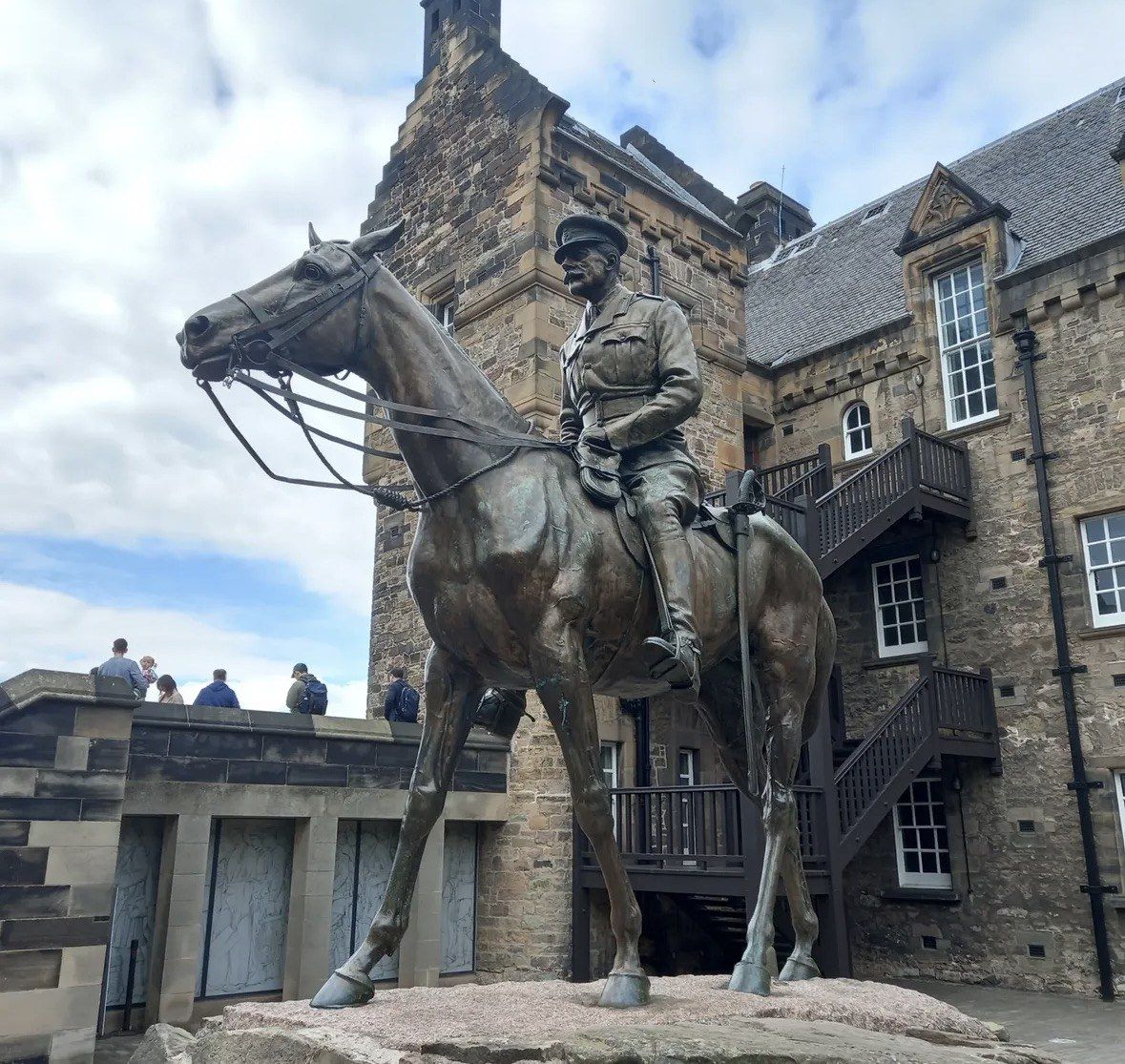
National Museums Scotland runs the museum, a separate national body from the one that operates the castle, and castle entry covers it with nothing further to pay at its door. Six galleries take in 400 years of Scotland at war. The building was an ordnance storehouse in the 1700s and later a military hospital; the museum has occupied it since 1933.
Two practical points before you plan around it. The museum is partially closed at the moment for essential building repairs, so expect some galleries to be shut when you arrive. It also keeps its own hours from 1 October to 24 December, opening at 9.45am with last entry at 4.30pm and closing at 4.45pm, ahead of the castle itself. Do not save it for the last part of a winter afternoon, and read the signage at the door on the day.
This is the longest of the four stops. Six galleries of objects reward unhurried reading, and on the castle's suggested two hours you will walk them rather than look at them.
What the war memorial asks of you
The Scottish National War Memorial stands on Crown Square, under an independent charitable trust. Visitors are asked to keep respectful silence inside and not to take photographs. Put the phone away before you cross the threshold.
It is a short stop and it changes the tone of the square. Going straight from here into the Great Hall across the courtyard is jarring, so take the memorial last on Crown Square if the order is yours to choose, then head for the steps down to the vaults.
The small graveyard for regimental dogs
Regimental mascots and soldiers' dogs have been buried inside the walls since 1840, and the plot counts as part of a visit. It is tiny, it sits below a wall, and you look into it from above rather than walk through it.
It gets missed because it is not signposted the way the big stops are, and neither the castle's own highlights list nor its access guide mentions it. No official page states the exact viewing position either, so the reliable method is to ask a steward near the summit buildings where to stand. Thirty seconds of asking saves a lap of the upper walls.
How much extra time to allow, and what the tours cover
The guided walks on this site put a local guide on the climb and the highlights and include your entry, which is the part that matters most: admission regularly sells out well ahead of the visit date, especially in summer, and once online tickets are gone there is no allocation held back at the gate. Neither itinerary is published stop by stop, so do not assume a guide will take you down to the vaults or through six museum galleries. Plan the military corners into your own time afterwards; your entry still covers them once the guided part ends.
For most people the arithmetic runs like this: the 1.5 hours walk, then an hour or more of your own across the vaults, the memorial and whatever of the museum is open. For the museum at reading pace, aim for a 9.30am entry so the afternoon is not the deciding factor.
If the military collections are the reason for the visit, the private option gives you the hours to use them. Three to four hours with your own guide leaves room to go slowly in the vaults and come back up to the dog cemetery, and it takes the walk up to Castlehill out of the day.
- Edinburgh Castle Guided Walking Tour - Entry Tickets Included: 1.5 hours of guided walking from £39, rated 4.9 ★ (5901 reviews), with a local guide and the entry fees inside the price and gratuities left out; you meet beside the Adam Smith statue on the Royal Mile
- Private Edinburgh Castle Tour: 3 to 4 hours from £245, rated 4.7 ★ (18 reviews), covering hotel pickup and drop-off, a professional local guide and the castle tickets, with food and drinks not part of the price
- Add at least an hour of your own time if you want the vaults, the memorial and the museum galleries without rushing
Questions people ask
Is there an extra charge for the National War Museum?
No. The museum is run by National Museums Scotland and is covered by your castle entry, so there is nothing more to pay once you are inside the walls. It is partially closed at present for essential building repairs, so some galleries may not be open when you get there.
Can I take photographs in the prison vaults and the memorial?
The Scottish National War Memorial asks visitors not to take photographs and to keep respectful silence, and that is the one photography rule stated on an official page for this part of the castle. For the vaults and the museum, read the signage at each door on the day rather than assuming.
Are the vaults manageable if stairs are difficult?
Getting down into the Prisons of War means working through several short flights of steps from Foog's Gate, each with a handrail on either side. There is no step-free way in. A mobility vehicle up to Crown Square can be requested from staff at the entrance, which gets you to the memorial, the Crown Room and the Great Hall, but not down into the vaults.
Which of these should I skip if I only have two hours?
Keep the vaults and the memorial, since both are on Crown Square or a flight of steps from it, and treat the museum as the stop to shorten. Six galleries covering 400 years cannot be done properly in the time left over from the Honours of Scotland and the Great Hall.
When does the castle close, and does that affect the museum?
The castle opens daily at 9.30am, closing at 6pm from 1 April to 30 September with last entry at 5pm, and closing at 5pm from 1 October to 31 March with last entry at 4pm. The National War Museum runs ahead of that in winter: from 1 October to 24 December it opens at 9.45am, admits its last visitors at 4.30pm and shuts at 4.45pm.
Read also