In shortEdinburgh Castle wheelchair access is workable but needs planning. The first 110m, from the gates to the gatehouse, is even tarmac tilted at around 5 degrees, and it is the stretch most wheels handle without help. Beyond the gatehouse the surface switches to cobble that curves as it rises, patchy underfoot, up to 15 degrees where it bites hardest. Ask at the entrance for the mobility vehicle to Crown Square if that climb is beyond you, and settle the way out at the same time, because the usual route down is 70 stone steps with a handrail.
110mesplanade, smooth tarmac
15 degreessteepest cobbled point
70 stepsstandard exit route
£245private tour from
Edinburgh Castle wheelchair access: the surface and the gradient
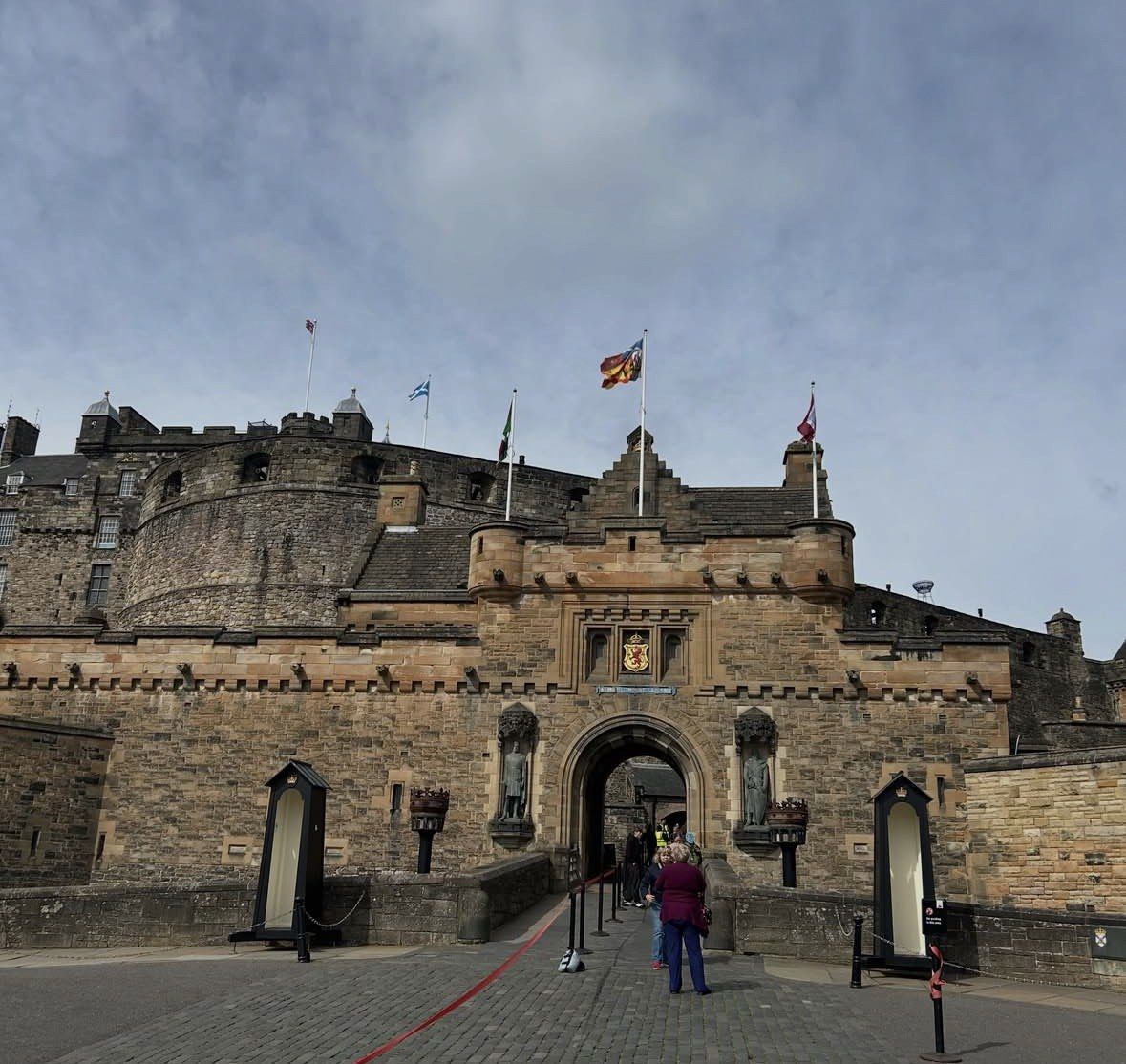
Two very different surfaces make up the approach. The esplanade in front of the ticket entrance runs 110m of smooth tarmac rising at roughly 5 degrees, and it is the easiest ground on the whole site: wide, even and manageable with a companion pushing. Past the gatehouse the character changes completely. Cobbles take over, curving as they climb, uneven in patches, and reaching 15 degrees at the worst point. That combination of camber and loose surface defeats most self-propelled chairs and makes heavy work of a frame or sticks.
The castle's own access guide gives those figures, and one official page describes the main approach more briefly as uneven cobbles on a five-degree gradient, so take the steeper figure as the planning number and confirm conditions with staff on the day, especially in wet weather. Leaving is a separate question from arriving. The standard exit route does not send you back down the cobbles: it drops 70 stone steps, with a handrail running alongside, and comes out on a different line from the one you came up.
| Stage of the route | Surface | Gradient or steps |
|---|
| Entrance esplanade to the gatehouse | Smooth tarmac, 110m | About 5 degrees |
|---|
| Gatehouse up to Crown Square on foot | Cobbles, curved, uneven in places | Up to 15 degrees at the steepest |
|---|
| Gatehouse up to Crown Square by mobility vehicle | Requested from staff at the entrance | Avoids the cobbled climb |
|---|
| Foog's Gate down to the Prisons of War vaults | Numerous short flights of steps | Handrails on both sides |
|---|
| Standard exit route | Stone steps | 70 steps with a handrail |
|---|
The tour that skips the walk up to Castlehill
When the gradient is the thing standing between you and the castle, look at the private option: it starts and finishes at your hotel, lasts 3 to 4 hours, costs from £245, and includes a professional local guide and the castle tickets. You set the walking pace and the number of stops.
★ 4.7/5 · 18 reviews
The Edinburgh Castle mobility vehicle and how to request it
A mobility vehicle runs up to Crown Square, and you ask staff for it at the entrance. There is no published booking form or timetable for it, so the practical approach is to raise it the moment you reach the gate rather than part way up the cobbles. If you want to know what the vehicle can carry before you commit to a date, telephone the castle on +44 (0)131 225 9846; the entrance and ticket office sit at Castlehill, Edinburgh Castle, Edinburgh EH1 2NG.
Ask about the return at the same time. The 15 degree cobbles are the part the vehicle removes, while the standard way out is the 70 steps, and that is the detail visitors discover too late. Settle with staff on arrival how you are getting back down to the esplanade, so the decision is not made for you at closing time.
Driving in: the spaces on the esplanade and how to ask for one
Accessible parking at Edinburgh Castle amounts to a small number of spaces on the esplanade itself, which puts you at the top of the hill rather than at the bottom of it. They can be taken on arrival if one is empty, or reserved in advance by emailing [email protected]. Your chances of finding one drop between May and October, because the esplanade is handed over to the Tattoo for most of that period: the grandstands go up from early May and have to be standing by the end of June, dismantling begins the day after the last performance, and the ground is clear again by mid-October. The performances themselves fall between 6 and 28 August in 2027, so a trip in those weeks needs the email sent early.
Those esplanade bays are the only parking of any kind up here. General public parking at the castle does not exist, which leaves a driver without a space at the Castle Terrace NCP on the Grassmarket side of the rock, facing the hill from below; coaches are barred from Johnstone Terrace altogether, so group drop-off and pick-up happens on Castle Terrace. If an esplanade space is not confirmed, a tour with hotel pickup and drop-off solves the arrival problem more reliably than any car park does.
What is level at the top, and which interiors have steps
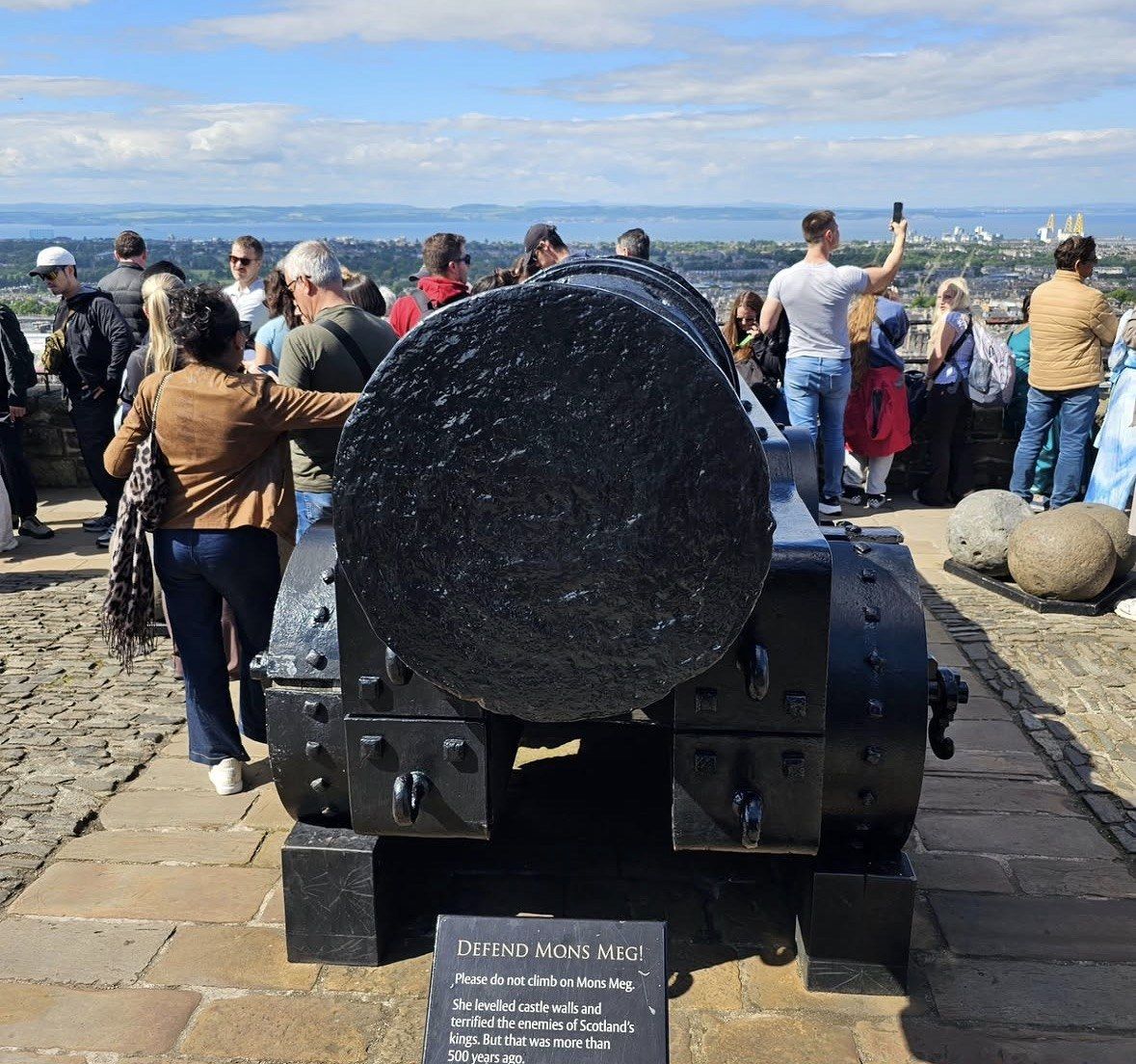
Once you are at Crown Square the climbing is done. The Crown Room with the Honours of Scotland, the Great Hall completed in 1511 and the Scottish National War Memorial all open off that single courtyard, so you move between doorways rather than up a hill, and the distances are short. St Margaret's Chapel of about 1130, Mons Meg and the dog cemetery, in use since 1840, sit on the upper part of the site too.
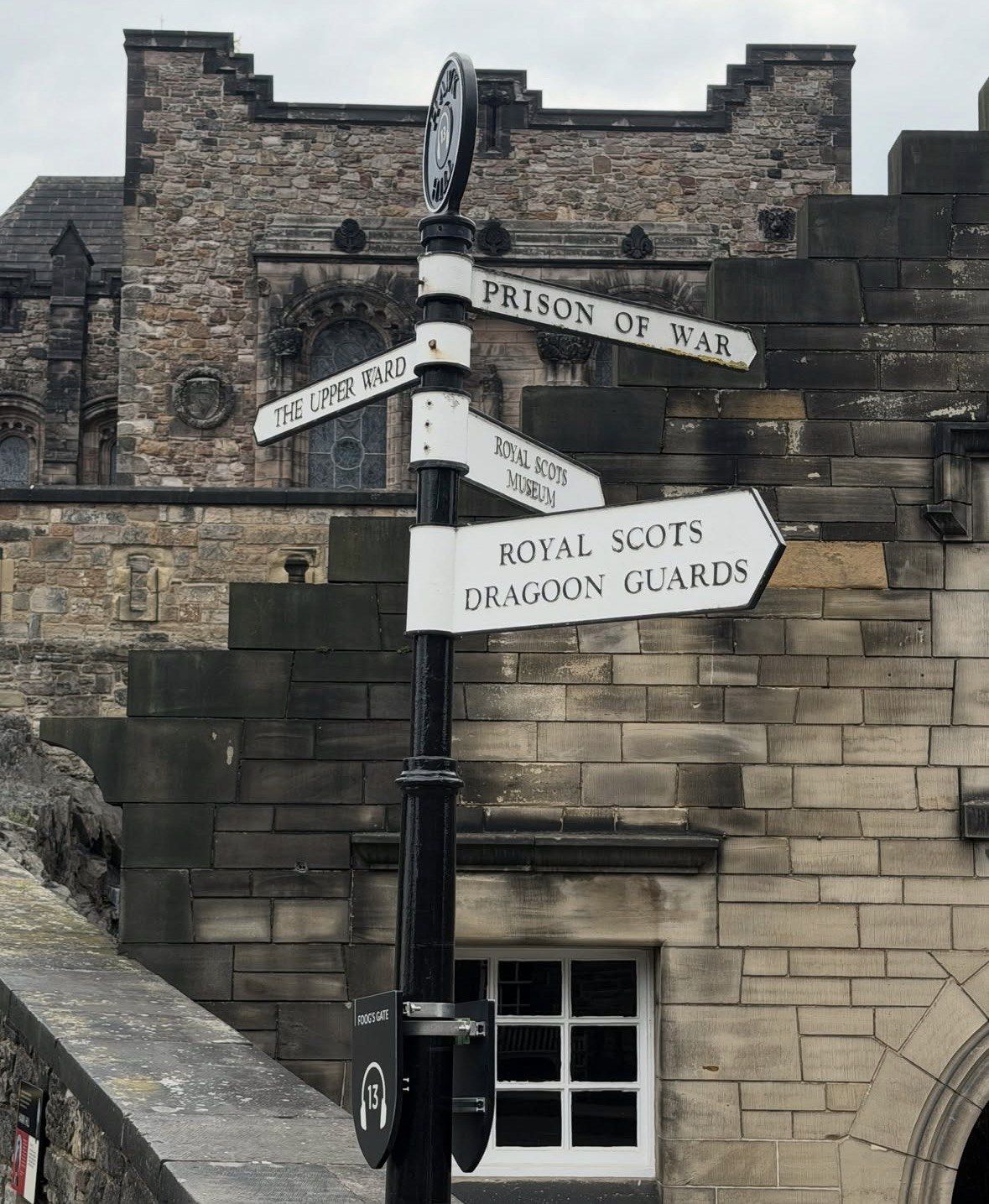
The one interior the official access guide singles out for steps is the Prisons of War. The vaults under Crown Square are reached from Foog's Gate by numerous short flights, with handrails on both sides, which is manageable for some walkers with time and out of reach for wheels. Access to the National War Museum is restricted for a different reason at present, with parts of it shut for essential building repairs; National Museums Scotland runs it, castle entry covers it, and its winter clock runs ahead of the castle's, so from 1 October to 24 December it opens at 9.45am, stops admitting at 4.30pm and closes at 4.45pm. Fit the museum in around the middle of your time inside the walls.
Dogs, carers and bags at the entrance
Only assistance dogs are admitted, and that includes roofed buildings, so a working dog stays with you through the Crown Room, the Great Hall and the museum galleries. Pet dogs cannot come in, there is nowhere on site that will hold them, and the esplanade is not a place to leave an animal waiting.
Carers accompanying a visitor with a disability are covered by the castle's own admission arrangement, and the castle states plainly that no proof of disability is required, so nobody is going to ask you for paperwork at the gate. Luggage is where the entrance stops being flexible: a rucksack of 30 litres or more, or anything suitcase-sized, gets turned away, the castle holds nothing for visitors, and bags can be opened and checked as you come through. Anyone carrying medical equipment in a large bag should raise it with staff at the entrance rather than hope.
Inside the Scottish National War Memorial, which an independent charitable trust runs rather than the castle, the trust asks everyone to leave cameras alone and keep a respectful silence.
- Assistance dogs: allowed, roofed areas included
- Pet dogs: not admitted, and not stored for you
- Carers: covered by the castle's admission arrangement, with no proof of disability required
- Bags: 30 litres and over refused, nothing held for visitors, searches possible
Judging feasibility and picking a tour that can be adapted
Be straight with yourself about the two pinch points: 15 degrees of cobble going up and 70 steps coming down. If a companion can push on a short steep slope, or if the mobility vehicle covers the climb and staff can route you out, the visit works and most of what people come for sits around one courtyard at the top. If neither of those holds, a visit where you are pushed uphill on uneven stone for the first twenty minutes is not a good day out.
Of the tours listed here, the guided walk of 1.5 hours from £39, rated 4.9 ★ (5901 reviews), includes a local guide and the entry fees and forms up on the Royal Mile below the castle, which means you walk the esplanade and the cobbles with the group at the group's pace. The private tour, 3 to 4 hours from £245 and rated 4.7 ★ (18 reviews), is the one that bends: hotel pickup and drop-off, a professional local guide and the castle tickets are included, food and drinks are not, and the length lets you stop, sit and skip the stepped vaults without holding anyone up. Tell the guide what you need before the day so the route is planned around it.
Either way, do not arrive without entry arranged. Advance entry is the only entry: the castle warns that dates fill up long beforehand, summer worst of all, and the gate keeps no spare allocation once the online one has sold. Work the rest of the day back from two hours, which is the castle's own minimum for the main attractions, and from the season: doors at 9.30am all year, closing at 6pm with last entry 5pm between 1 April and 30 September, closing at 5pm with last entry 4pm between 1 October and 31 March.
Questions people ask
Can the mobility vehicle be arranged before the day of the visit?
The castle describes it as something you request from staff at the entrance, and publishes no advance booking process for it. If you need certainty before choosing a date, telephone +44 (0)131 225 9846 and ask what the vehicle can take. The destination is Crown Square, at the top of the site.
How much time should I allow if I move slowly?
Historic Environment Scotland, the registered Scottish charity that runs the castle (SC045925), advises at least two hours for the main attractions, and that assumes a steady walking pace. Take a 9.30am entry if one is available, since that is the daily opening time and gives you the longest run at the site. In winter, last entry is 4pm and closing is 5pm, which leaves barely the minimum.
What is the easiest way to get here without driving?
Waverley station and the Princes Street tram stop are both 0.4 miles away, and the castle itself warns the walk from the station is uphill the whole way; Haymarket is about a mile. Lothian Buses cross the Old Town and the castle points visitors to the Mound or George IV Bridge, which starts you much closer to the top. Coming in from the airport, count 25 minutes on the Airlink 100 to Waverley Bridge, or a tram every seven minutes taking about 30 minutes to Princes Street.
Is the National War Museum worth including at the moment?
It is partially closed for essential building repairs, so treat it as a bonus rather than a fixed plan. What is open comes from six galleries spanning 400 years of Scotland at war; National Museums Scotland runs the place and your castle entry covers it. Its day ends at 4.45pm from 1 October to 24 December, so it shuts up before the castle does.
Can I sort out entry when I get there if the day goes wrong?
No. Entry regularly goes long before the date arrives, summer especially, and the gate holds nothing in reserve once the advance allocation has sold. A tour whose price includes the entry fees removes that risk, which matters more when your day already depends on a mobility vehicle being available.
Read also