In shortEdinburgh castle reviews concentrate praise on the views from the batteries, the Honours of Scotland, the 1pm gun and the royal interiors on Crown Square. The recurring criticism is crowding, plus the steep cobbled approach and the queue at the Crown Room. With 2,044,963 visits in 2025, an early slot booked well ahead solves most of it.
2,044,963visits in 2025
15thmost visited in the UK
2 hoursminimum time advised
4.9 ★ (5901 reviews)guided walk on this site
The numbers behind Edinburgh Castle reviews
Edinburgh Castle recorded 2,044,963 visits in 2025. That makes it the most visited paid attraction in Scotland and 15th across the United Kingdom. Stirling Castle, the obvious comparison in the same country and the same year, took more than 620,000, roughly a third of the figure. Any reading of visitor feedback has to start there: most of what people react to is the density of other visitors inside the walls.
The second number is supply. Reviews that end with someone being turned away come down to what the castle itself says: admission tends to go well before the date on the ticket, summer worst of all, and nothing is held in reserve at the entrance once the online allocation has gone. Published feedback keeps landing on the same two pieces of advice: book ahead, and go early. Historic Environment Scotland, a registered Scottish charity (SC045925), runs the castle, and the length of visit it recommends for the main attractions, museums and vaults included, is at least two hours.
The guided walk that answers most of the complaints
1.5 hours from £39, rated 4.9 ★ (5901 reviews), with a local guide and the entry fees included, so the two things reviewers grumble about most, getting in and understanding what you are looking at, are handled before you reach the gatehouse.
★ 4.9/5 · 5,901 reviews
What visitors say about Edinburgh Castle when they are happy with it
Praise concentrates on five things, and they are the same five across almost every published summary of feedback. The views come first. The batteries on the north side open over Princes Street and the whole city below, and the Half Moon Battery, built after the Lang Siege of 1573, gives the same line of sight that the gunners had. People stop walking there, which is also why that stretch of wall clogs.
The Honours of Scotland come second. Reviewers focus on the age: nothing older survives among the crown jewels of the British Isles, and the set was first used as a set when Mary Queen of Scots was crowned in 1543. The Crown Room is small and the display is short, so go in during the first hour after opening, before the room fills.
Third is the One o'Clock Gun. The piece is a 105mm field gun, fired at 1pm on every day of the year apart from Sundays, Good Friday and Christmas Day; the signal has run since 1861, when businessman John Hewat brought the idea home from Paris so ships in the Firth of Forth could check the time. The same detail turns up in published feedback as both grumble and favourite moment, because the bang startles anyone who did not know it was coming.
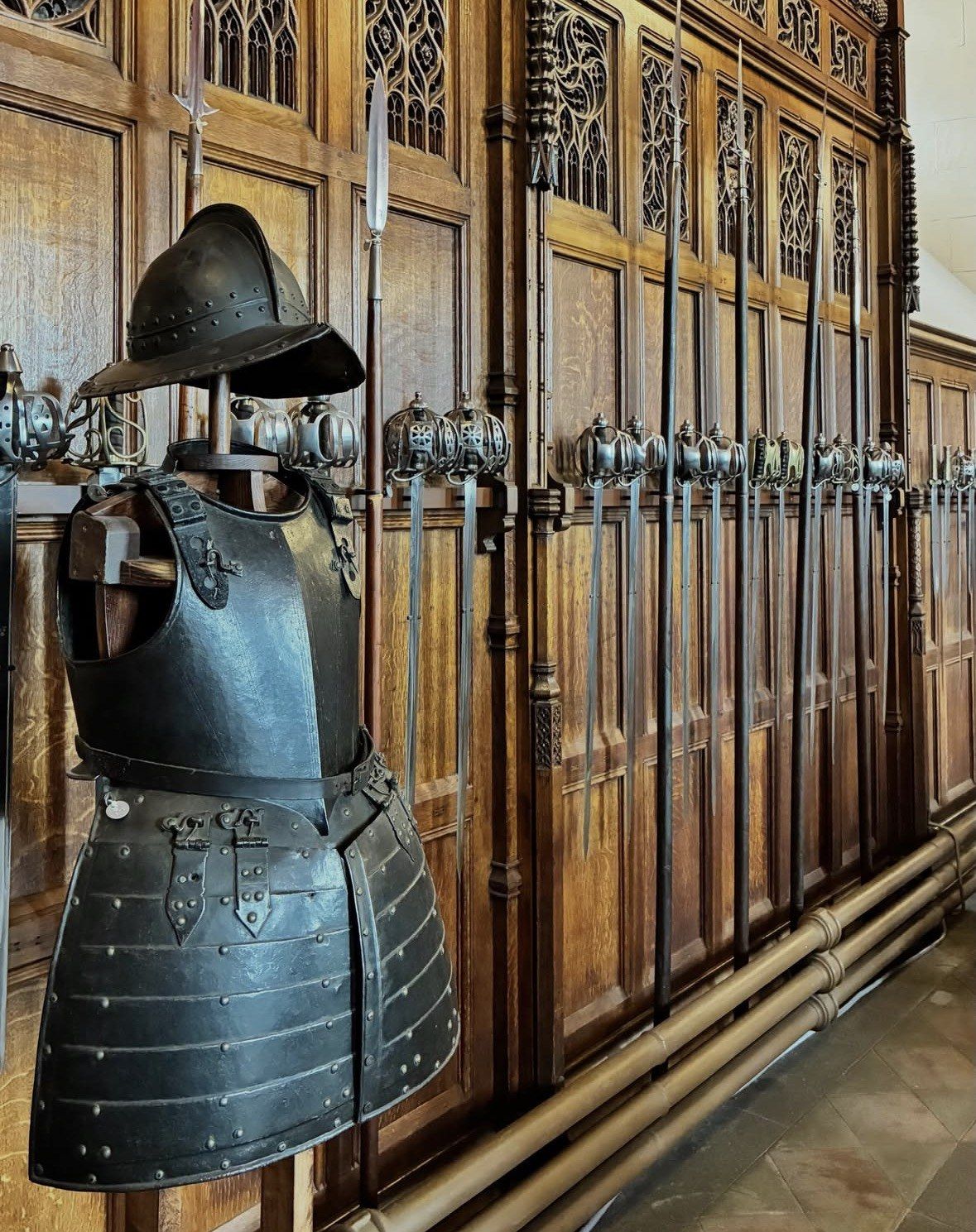
Fourth and fifth run together: the sense of depth, and the royal interiors. Comments about the chapel usually come with its date attached: David I raised St Margaret's Chapel around 1130, and nothing else still standing in Edinburgh is older. Mons Meg, six tonnes of siege gun given to James II in 1457, has stood silent since 30 October 1681. The Great Hall, on the same square as the royal apartments, was finished in 1511 to host the state ceremonies of James IV. Reviewers describe the castle as the defining image of the city and a first stop for people arriving in Edinburgh for the first time, with particular appeal for families and anyone who reads history for pleasure.
The five criticisms that keep coming back, and the fix for each
Crowding at peak hours is the single most repeated complaint. It is a mid-morning to mid-afternoon problem, driven by coach and cruise arrivals landing after the gates open. The fix is the 9.30am slot, which is when the gates open on every day the castle admits visitors, and a guide who knows which door to take first.
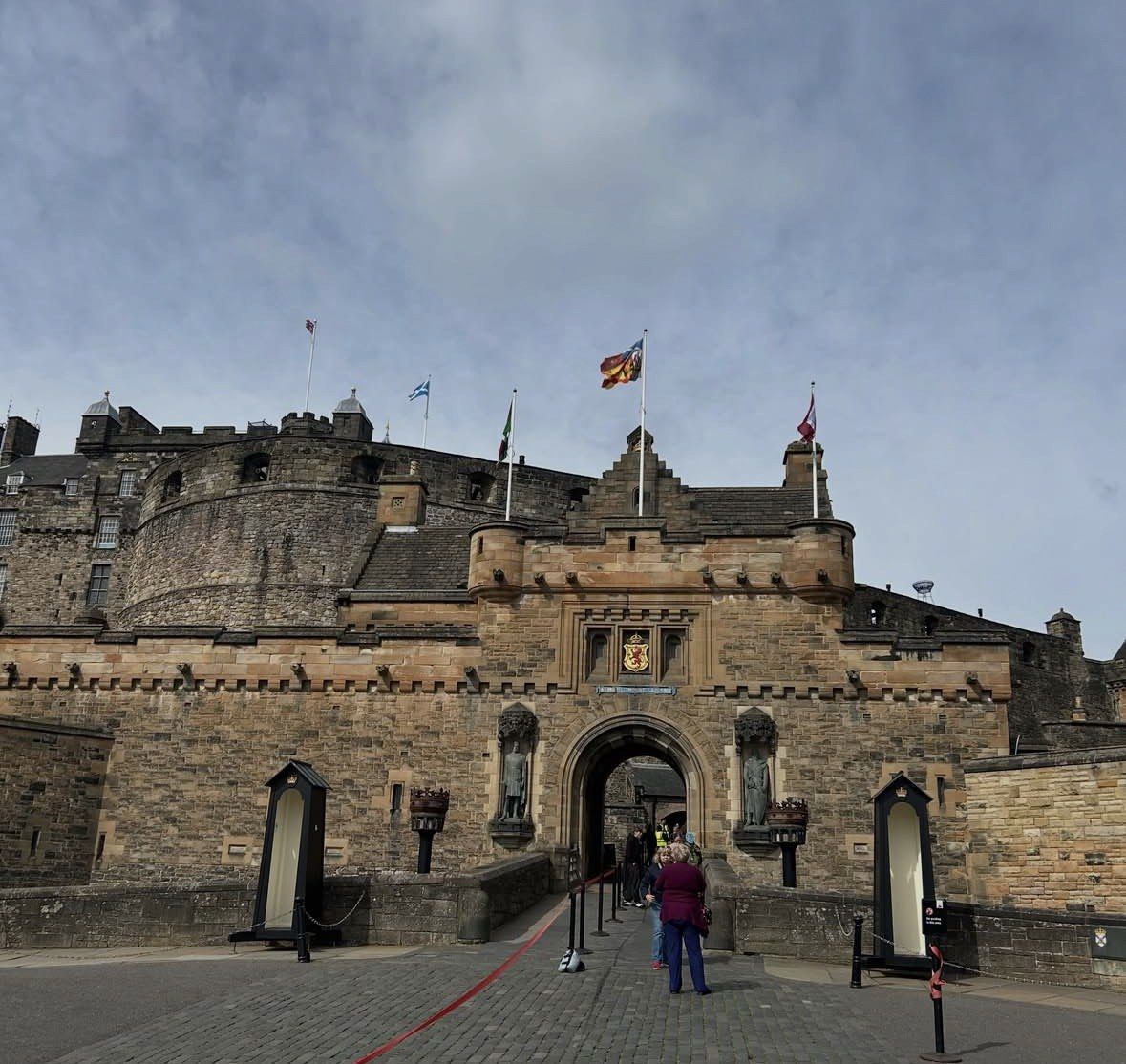
The approach is the second. Reviewers describing a hard walk are describing two surfaces: 110m of smooth tarmac across the esplanade on a gradient of about 5 degrees, then cobbles that bend upward, run uneven in patches and hit 15 degrees where they are worst. On the way out, the standard route takes you down a flight of 70 stone steps with a handrail alongside. Staff at the entrance will arrange a mobility vehicle up to Crown Square if you ask, and the private tour listed on this site covers hotel pickup and drop-off, which removes the climb to Castlehill altogether.
The queue at the Crown Room is the third, and it is the one most people create for themselves by arriving at the castle and wandering upward. Go to Crown Square first and take the Crown Room door before mid-morning, then come back out to the chapel, Mons Meg and the batteries.
Walking round without commentary is the fourth. The route climbs rather than loops, nothing on the way up explains why the Half Moon Battery is shaped the way it is, and the Honours of Scotland take about ninety seconds to walk past if nobody has told you what 1543 means. A guided walk front-loads the context on the way up so the short passage through the Crown Room makes sense.
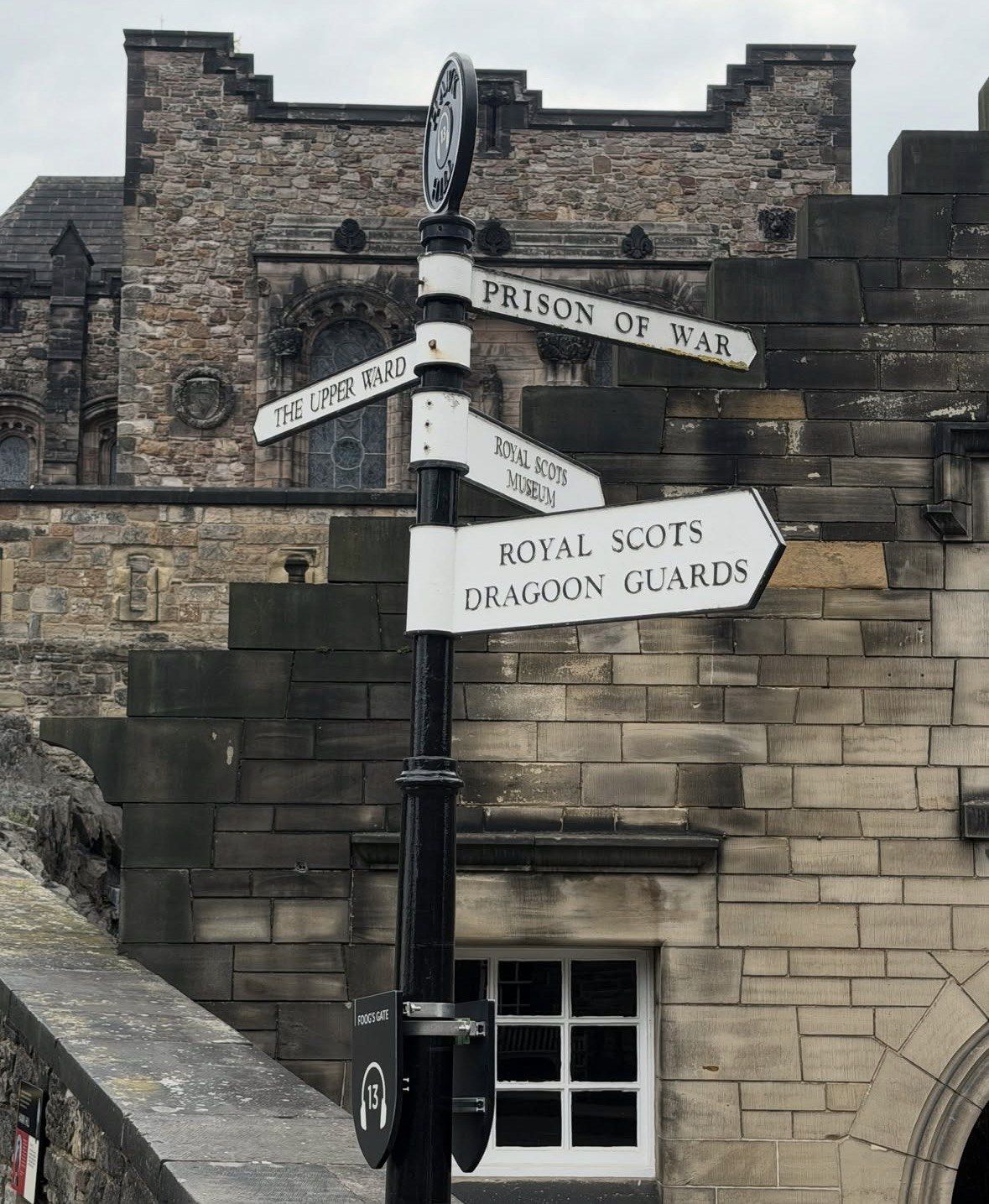
The amount of walking is the fifth. Two hours is the published minimum for the main attractions, the ground is uphill from the moment you leave Waverley or the Princes Street tram stop, both 0.4 miles below Castlehill, and the Prisons of War vaults are reached from Foog's Gate by numerous short flights of steps with handrails on both sides. Plan the day around one castle and leave the rest of the Old Town for the afternoon.
| Complaint in published feedback | What is actually behind it | The practical fix |
|---|
| Too crowded | 2,044,963 visits in 2025, concentrated mid-morning to mid-afternoon | Take the 9.30am entry; gates open at 9.30am every day the castle opens |
|---|
| Steep, hard approach | Upward-curving cobbles, patchy surface, a gradient of 15 degrees at its worst | Ask at the entrance for the mobility vehicle to Crown Square, or take the private tour with hotel pickup |
|---|
| Long wait at the Crown Room | A single small room with the British Isles' oldest set of crown jewels | Do Crown Square first, before the mid-morning arrivals |
|---|
| Not enough explanation on the route | The climb has little interpretation and the Crown Room passage is short | A 1.5-hour guided walk covers the Honours and the 1543 coronation before you reach the door |
|---|
| A lot of walking | At least two hours advised, with steps down from Foog's Gate to the vaults and 70 steps on the exit | Keep the castle as the only major stop of the half day |
|---|
| Could not get in on the day | Admission sells out well ahead, particularly in summer, with nothing held back at the gate | Book weeks ahead for summer and school-holiday dates; the guided walks on this site include entry |
|---|
Timing the day so the crowding never bites
Book the 9.30am opening slot. It puts the Crown Room and the Great Hall behind you before the heaviest arrivals, and still leaves you inside the walls for the gun. Treat 12.45pm as the deadline for reaching the battery that faces the city, because by 1pm the wall is already lined with people. On a Sunday, do not build the day around it, because the gun does not fire.
Seasonal hours decide how much slack you have. Between 1 April and 30 September the doors open at 9.30am, the last entry falls at 5pm and closing is 6pm. The 1 October to 31 March pattern is tighter, with a 4pm last entry against a 5pm close, so a late arrival gets barely the two hours the castle itself asks you to allow. Christmas and New Year sit outside both patterns: 9.30am to 4pm on 24 December, no admission at all on 25 and 26 December, and an 11am start on 1 January. Check timings on the day of your visit, as published hours can change.
Two gate rules catch people out and both show up in complaints. Anything suitcase-sized, and any rucksack from 30 litres up, is turned away at the entrance; there is no store for it, and bags can be searched as you go in. Anyone under 16 needs an adult with them, and dogs stay outside unless they are assistance dogs, which are admitted everywhere, roofed buildings included.
Set your expectations on the National War Museum before you go in. National Museums Scotland runs it, castle entry covers it, part of it is shut at the moment for essential building repairs, and across 1 October to 24 December it starts at 9.45am, stops admitting at 4.30pm and shuts at 4.45pm, earlier than the castle around it.
Who the visit suits, and who should pick a second castle instead
Go if this is your first trip to Edinburgh, if you want the Honours of Scotland and the Great Hall of 1511, if you want the view over Princes Street from the batteries, or if you are travelling with children who will remember a 105mm gun going off at 1pm. Go with a guide and an early slot, and the two most common complaints stop applying to you.
Think twice if crowds genuinely spoil a day for you, if the climb to Castlehill is more than you want, or if you have already done one big fortress this trip and are looking for something quieter. Published feedback points the crowd-averse towards calmer parts of the city, and Stirling Castle is the obvious second option: the medieval Great Hall with its high timber roof, the Royal Palace recreated as James V's scheme may have looked and the childhood home of Mary Queen of Scots, the Chapel Royal, the Argyll and Sutherland Highlanders Museum, and ramparts around three enclosures looking over the town and the countryside. It took more than 620,000 visitors in 2025 against Edinburgh's 2,044,963, roughly 31 miles away, with Waverley to Stirling trains averaging about 49 minutes.
The 9-hour small-group day listed on this site reaches it in a 16-seat mini-coach with a maximum of 16 passengers and an English-speaking driver-guide, taking in Loch Lomond and the Kelpies on the same run, from £62 and rated 4.7 ★ (1399 reviews); Stirling Castle admission is included if that option is selected. Keep it as a second or third day rather than a replacement for Edinburgh Castle.
- Worth it: first-time visitors, history readers, families, anyone who wants the city view from the walls
- Worth it with adjustments: slow walkers, wheelchair users and anyone wary of the cobbles, using the mobility vehicle or a tour with hotel pickup
- Think again: travellers who hate crowds in any form, or who have limited patience for queueing at one small room
- Better as a different day out: Stirling Castle, with Loch Lomond and the Kelpies on the same trip
Questions people ask
Is Edinburgh Castle worth the money?
For a first visit to Edinburgh, yes, provided you go early and read up on the pieces first. You are paying for the oldest crown jewels in the British Isles, a hall completed in 1511, Edinburgh's oldest surviving building from around 1130 and the view over the city from the wall tops. Visitors who feel short-changed are usually the ones who arrived at midday without a guide and spent the time queueing.
How far ahead should I book?
Weeks ahead for summer and school-holiday dates, and further still for August. The castle states that tickets regularly sell out well before the visit date and that no allocation is kept back once online tickets are gone. A tour that includes entry removes that risk from your day.
Is the Stone of Destiny on display at the castle?
Do not plan your trip around it. Eight things appear on the castle's published list of highlights: the Honours of Scotland, the One o'Clock Gun, St Margaret's Chapel, Mons Meg, the Great Hall, the National War Museum, the Prisons of War and the Scottish National War Memorial. The Stone is absent from that list. Several tour listings elsewhere still advertise it.
Can I drive and park at the castle?
Edinburgh Castle has no public car parking of any kind. The closest option is the Castle Terrace NCP, round on the Grassmarket side of the rock. Coaches are kept off Johnstone Terrace altogether: they set down and pick up on Castle Terrace and park at Regent Road or Inverleith Place. The esplanade holds a handful of accessible spaces, claimed on arrival or reserved beforehand by email to [email protected], and they get scarcer from May to October.
Does anything on the esplanade block the view in summer?
The Royal Edinburgh Military Tattoo occupies the esplanade with a temporary grandstand of almost 9,000 seats. Build-up begins in early May with a deadline of the end of June; take-down starts the day after the last performance, and the esplanade is empty again by mid-October. The 2027 Tattoo runs from 6 to 28 August with a production titled The Same Heart Beat, lasting approximately 90 minutes.
Read also