In shortInside Edinburgh Castle the route climbs from the esplanade and gatehouse past the Argyle and Mills Mount batteries, where the 105mm One o'Clock Gun fires at 1pm, and on to Crown Square: the Honours of Scotland in the Crown Room, the Great Hall of 1511, the Prisons of War vaults and the Scottish National War Memorial. Beyond them come St Margaret's Chapel of around 1130, Mons Meg and the National War Museum.
8stops on the highlight list
2 hoursminimum the castle advises
around 1130St Margaret's Chapel built
6 galleriesinside the National War Museum
What is inside Edinburgh Castle
Count the stops you are walking between and you get eight, every one of them on the castle's own highlight billing: the Crown Room with the Honours of Scotland, the One o'Clock Gun, St Margaret's Chapel, Mons Meg, the Great Hall, the National War Museum, the Prisons of War and the Scottish National War Memorial. The Stone of Destiny is absent from that list, so do not build a visit around seeing it here.
Walking all eight uses up the two hours the castle quotes as its minimum, museums and vaults counted in. The site is run by Historic Environment Scotland, a registered Scottish charity (SC045925), and it recorded 2,044,963 visits in 2025, more than any other paid attraction in Scotland and 15th across the UK. The pinch points are all indoors, where everyone filters through the same doorways at the same pace.
The order below follows the ground, because the rock decides the sequence: esplanade, gatehouse, batteries, then the climb to Crown Square and the higher ground past it.
The esplanade, the gatehouse and the first climb
The esplanade runs 110m of smooth tarmac rising at about 5 degrees, and that is the easy part. Past the gatehouse the surface turns to cobbles, curved and uneven in patches, steepening to 15 degrees at the worst point. The standard exit route sends you down 70 stone steps with a handrail later on, so you leave by a different line from the one you walked up.
Grandstand erection for the Royal Edinburgh Military Tattoo starts in early May and has to be complete by the end of June, so the esplanade stops being open ground from then. Take-down starts the morning after the last performance, and the tarmac is clear again by mid-October. The 2027 Tattoo runs 6 to 28 August. Through that season the bicycle racks behind the ticket box are gone, and the small number of accessible spaces on the esplanade are harder to get.
If the cobbles are the problem, the mobility vehicle up to Crown Square is arranged by staff at the entrance, not by anyone further up the hill. Ask as you come in, while you are still on the flat.
The outdoor route with a guide, entry covered, from £39
The walk runs 1.5 hours, with a local guide and the entry fees taken care of. It covers the outdoor route up the rock and leaves you inside afterwards for the Crown Room, the Great Hall and the museum at your own pace.
★ 4.9/5 · 5,901 reviews
The batteries, Mons Meg and the One o'Clock Gun
The Half Moon Battery came out of the Lang Siege of 1573, and the batteries are where published visitor feedback concentrates its praise: the drop over the city and Princes Street is what stops people walking. They also take a crowd well, since you are outdoors and can stand where you like.
The gun you hear is a 105mm field gun, fired from the Mills Mount side at 1pm on every day the tradition runs, which means every day apart from Sundays, Good Friday and Christmas Day. The custom dates from 1861, when the businessman John Hewat brought the idea back from Paris as a time signal for shipping in the Firth of Forth. Be in position by about 12.45pm. Reviewers routinely describe the bang as loud enough to startle anyone not expecting it, and there is no point planning a Sunday visit around it.
Mons Meg is the older gun by a long way. Six tonnes of it, handed to James II in 1457, built to throw a 150kg gunstone up to two miles, and silent since 30 October 1681. Most people give it thirty seconds; give it two minutes and read the weight against the barrel you are standing beside.
Edinburgh Castle highlights in Crown Square
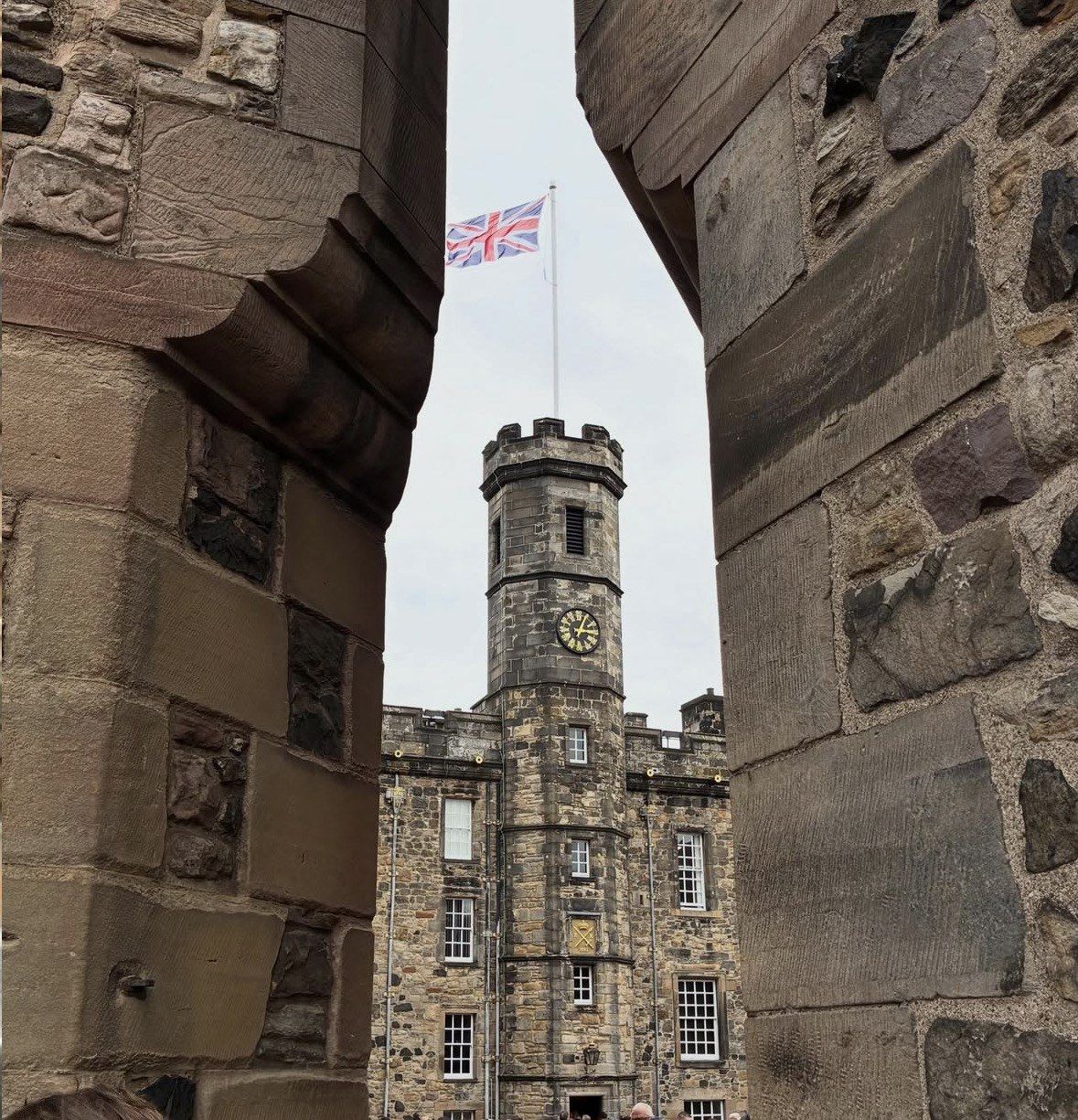
Start with the Crown Room on Crown Square: the Honours of Scotland inside it are the oldest crown jewels in the British Isles and were first used together when Mary Queen of Scots was crowned in 1543. It is indoors, the flow runs one way, and it fills from mid-morning as the coach and cruise arrivals reach the top of the rock.
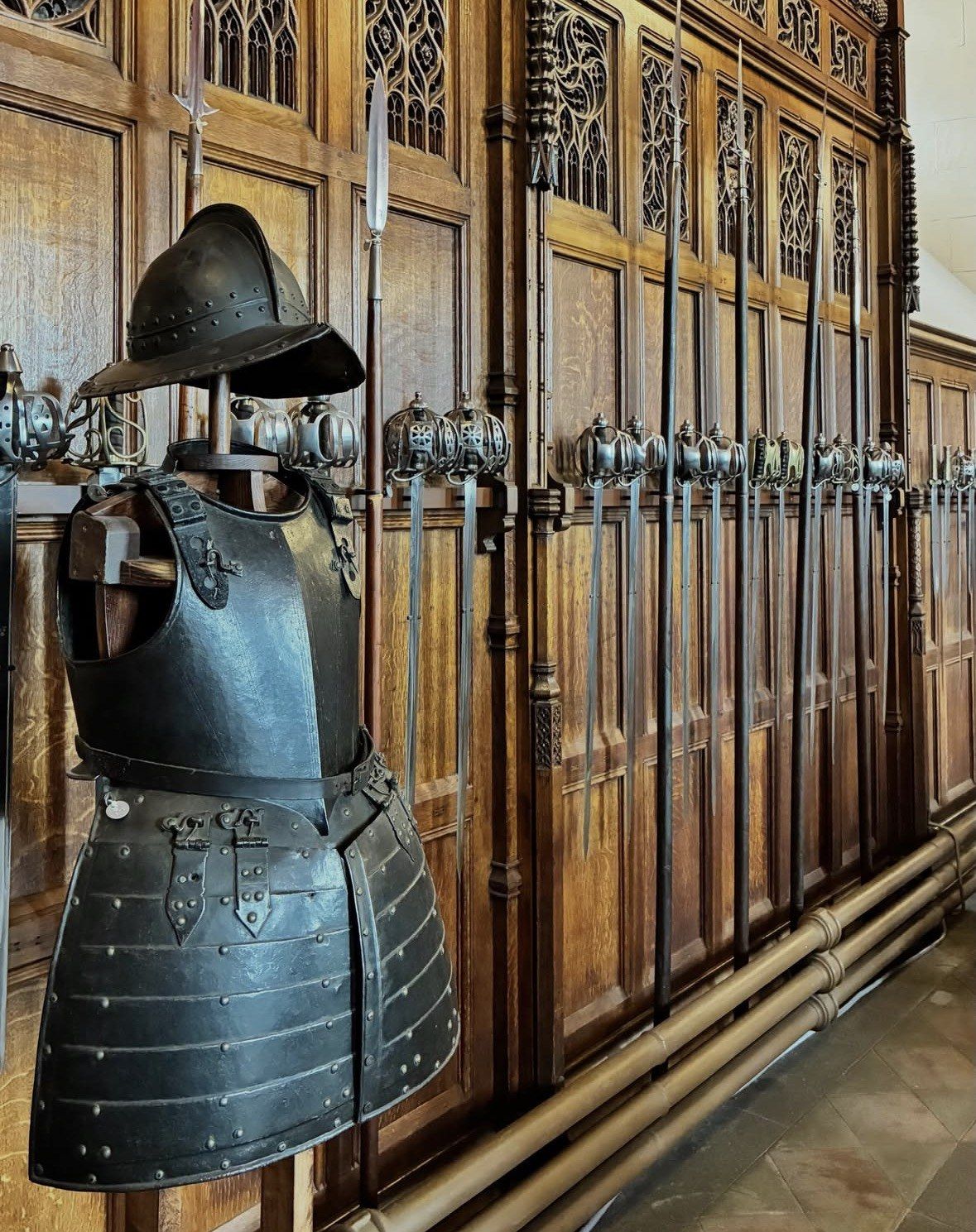
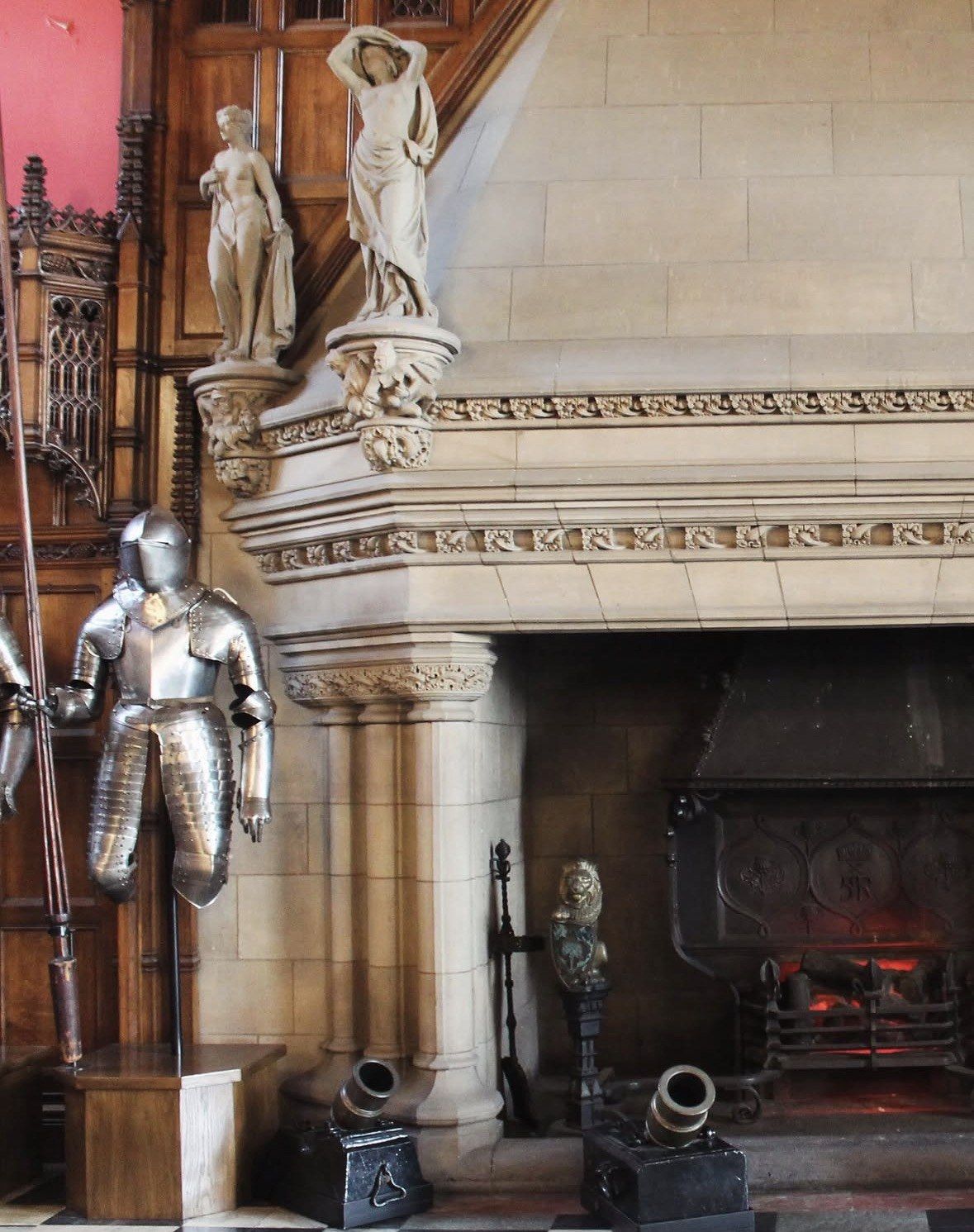
Across the square, the hall was raised around 1510 and finished in 1511 so that James IV had a room for state ceremonies. One room, one timber roof, and enough space that it takes a crowd better than the Crown Room, so it can wait until later if there is a queue at the door.
Below the square, the Prisons of War vaults are entered from Foog's Gate, down numerous short flights of steps with handrails on both sides. The first occupants were pirates: 21 of Black Bart's crew, captured off Argyll in 1720. Prisoners of war followed from 1757 to 1814, beginning with French privateers captured in 1758, and the interiors are presented as a reconstruction of about 1800. Two things to find: an early Stars and Stripes scratched into a door, and the hole in the defences that 49 prisoners escaped through in 1811, still visible today. The youngest prisoner on record was six years old, captured at Trafalgar in 1805.
The Scottish National War Memorial stands on the same square, run by an independent charitable trust. It sits inside the walls and is covered by castle entry. Photography is not permitted and visitors are asked to keep respectful silence, so put the phone away before you go in and save the conversation for outside.
St Margaret's Chapel, the dog cemetery and the National War Museum
Nothing else you pass inside the walls is as old as the chapel: David I put it up around 1130 for his mother, Queen Margaret, who had died at the castle in 1093, and it has outlasted every other building in Edinburgh. The interior is tiny: five minutes covers it. Wait for a gap between groups instead of going in behind one.
The dog cemetery has taken regimental mascots and soldiers' dogs since 1840, and it counts as one of the things you see on the way round. It is small, and easy to walk straight past.
The National War Museum is run by National Museums Scotland, a separate national body from the organisation that operates the castle, and it sits inside the walls covered by castle entry. Its building was an ordnance storehouse in the 1700s and later a military hospital, and the museum moved in during 1933; six galleries inside cover 400 years of Scotland at war. Essential building repairs have it partially closed at the moment. Its winter timings run ahead of the castle's: from 1 October to 24 December the doors open at 9.45am, the last visitors go in at 4.30pm and it shuts at 4.45pm, so keep it out of your plan for the final hour of the day. The repair work is ongoing, so check the day's arrangements when you arrive.
Which stops suit a guided walk and which to do on your own
Live commentary earns its place outdoors: the esplanade, the gatehouse, the batteries, Mons Meg and the ground around Crown Square, where a guide can keep talking while you walk and where the dates actually need explaining. The tours listed here work that way, with a local guide and entry included.
The indoor stops go better alone afterwards, and your entry keeps you inside once the walk ends. The Crown Room moves in one direction and will not wait for a group. The memorial asks for silence, which rules out commentary. The museum galleries keep their own hours under their own operator, with partial closures, so they take as long as they take. The vaults mean repeated short flights of steps, slow going for a group and easy on your own.
Allow at least two hours in total. The usual arithmetic is a 1.5-hour guided walk, then forty minutes to an hour of your own time across the Crown Room, the Great Hall, the memorial and the museum.
| Stop | What it is | How to see it |
|---|
| Honours of Scotland, Crown Room | The oldest crown jewels in the British Isles, first used together at Mary Queen of Scots' coronation in 1543 | Indoors, one-way flow; go early in your visit |
|---|
| One o'Clock Gun | A 105mm field gun fired at 1pm every day except Sundays, Good Friday and Christmas Day | Outdoors; be in position by about 12.45pm |
|---|
| Mons Meg | Six-tonne siege gun gifted to James II in 1457, last fired on 30 October 1681 | Outdoors, a short stop with commentary |
|---|
| Great Hall | Built around 1510 and completed in 1511 for the state ceremonies of James IV | Indoors; leave until later if there is a queue |
|---|
| St Margaret's Chapel | Built by David I around 1130, Edinburgh's oldest surviving building | Tiny interior, a few quiet minutes |
|---|
| Prisons of War | Vaults under Crown Square reconstructed as they looked around 1800 | Steps from Foog's Gate with handrails both sides; own pace |
|---|
| National War Museum | Six galleries on 400 years of Scotland at war, run by National Museums Scotland, covered by castle entry | Own pace; partially closed for repairs and closes before the castle |
|---|
| Scottish National War Memorial | Run by an independent charitable trust, inside the walls and covered by castle entry | No photography, respectful silence; walk through on your own |
|---|
Fitting it into one visit
Gates open at 9.30am on every day the castle opens. From 1 April to 30 September closing is 6pm with last admission at 5pm; from 1 October to 31 March closing is 5pm with last admission at 4pm. The route is off the table on 25 and 26 December, when nobody is admitted, shortened on 24 December with a 9.30am to 4pm day, and shifted on 1 January, when the gates wait until 11am. A winter afternoon arrival leaves barely the two hours the castle recommends, and the museum shuts before the castle does.
Take the 9.30am slot. Early entry puts the Crown Room and the Great Hall behind you before the busiest hours, and still leaves you on the battlements for 1pm on a weekday.
Entry is the part people get wrong. Admission sells out weeks ahead of the date, summer worst of all, and the gate keeps no quiet reserve for anyone who turns up after the online allocation has gone. A tour with entry included settles that for a fixed date.
Two rules bite at the entrance. Suitcases and any rucksack of 30 litres or more are refused, nothing is stored for visitors and bags may be searched, so a visit on a departure morning means dropping luggage somewhere else first. Children under 16 must be accompanied by an adult, and only assistance dogs come in, roofed buildings included.
Questions people ask
How long does it take to see everything inside Edinburgh Castle?
Two hours is the minimum the castle itself puts on the main attractions, with the museums and the vaults counted in. Most people get there with a 1.5-hour guided walk plus their own time in the Crown Room, the Great Hall, the memorial and the war museum. Allow longer if you want to be on the batteries for 1pm and then carry on afterwards.
Is the Stone of Destiny inside Edinburgh Castle?
Walk the full route and you will not pass it: the castle's own highlight list runs Honours of Scotland, One o'Clock Gun, St Margaret's Chapel, Mons Meg, Great Hall, National War Museum, Prisons of War and Scottish National War Memorial, with no Stone of Destiny on it. Plenty of tour listings elsewhere still advertise it, so do not pick a visit on that basis.
Can I reach Crown Square without the cobbled climb?
Staff at the entrance can arrange a mobility vehicle to Crown Square, and it is worth asking as you arrive. The main approach is uneven cobbles rising to 15 degrees, and the standard exit involves 70 stone steps with a handrail. Getting down into the vaults means numerous short flights of steps from Foog's Gate, handrails on both sides.
What can I not take inside the walls?
A suitcase, or any rucksack from 30 litres up, will be turned away at the entrance, there is nowhere inside that will hold it for you, and bags may be searched as you come in. Dogs stay outside unless they are assistance dogs, which can go into the roofed buildings as well. Leave luggage at your hotel or a station left luggage office before you walk up.
Why is photography not allowed in the Scottish National War Memorial?
The memorial is run by an independent charitable trust rather than the organisation that operates the castle, and it asks visitors not to take photographs and to keep respectful silence. It sits inside the walls and is covered by castle entry. Walk through it on your own instead of with a talking group.
Read also