In shortThe sequence on this rock opens with an Iron Age hill fort, raised long before any castle. Royal connections run back around 1,000 years, the earliest securely dated being the death of Queen Margaret at the castle in 1093. The oldest surviving building is St Margaret's Chapel, built by David I around 1130. James IV's ceremonial hall reached completion in 1511. Historic Environment Scotland operates the site today.
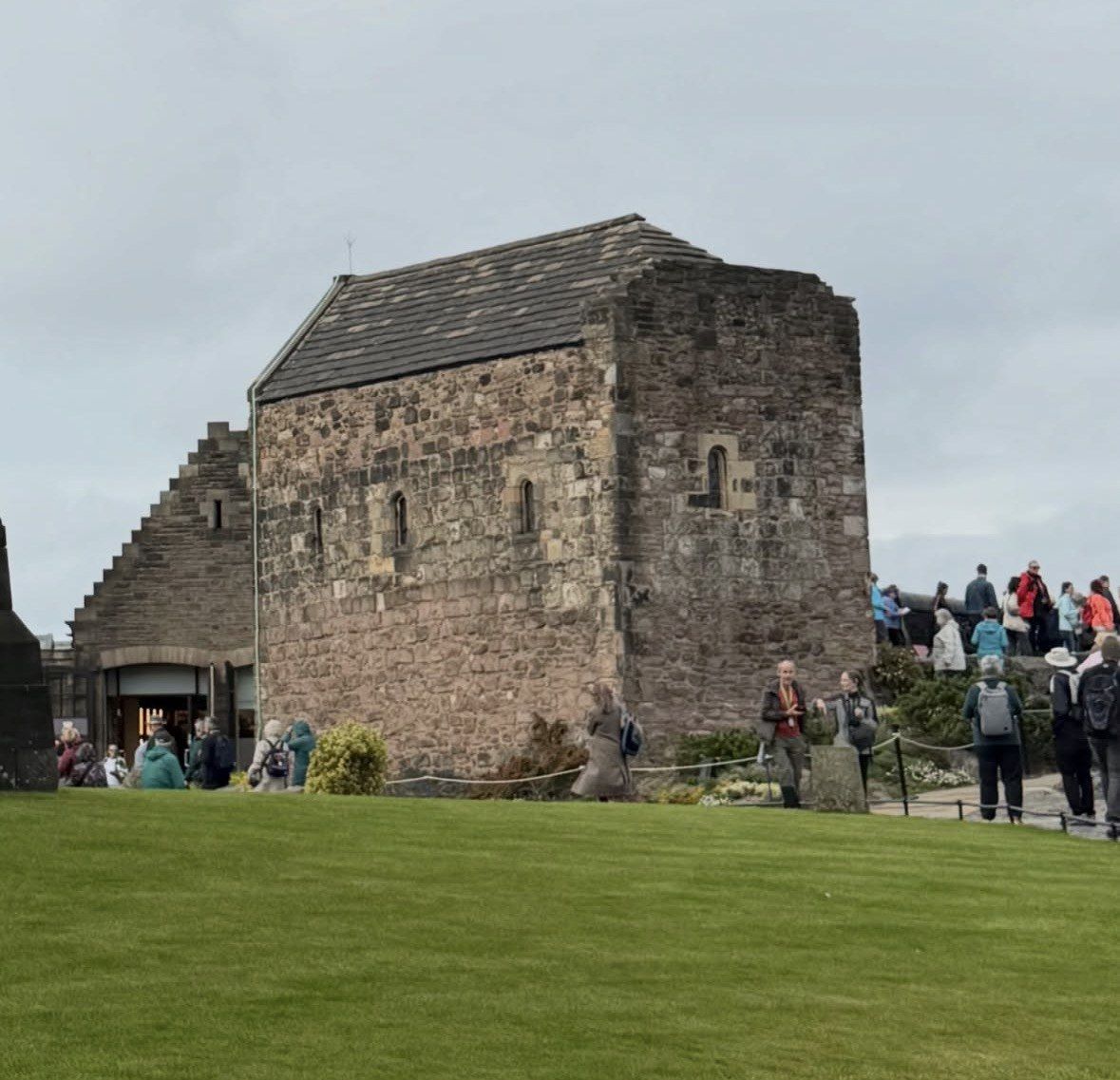
around 1130St Margaret's Chapel built
1457Mons Meg gifted to James II
1511Great Hall completed
2,044,963visits recorded in 2025
The rock was occupied long before the castle
Iron Age people built a hill fort on the castle rock, well before anything that could be called a castle existed. That is the starting point the castle's own history pages use, and it explains the shape of everything above it: the walls and batteries sit where the crags allowed them to be built, bending with the contours of the summit.
Royal connections on the site stretch back around 1,000 years. The earliest securely dated royal association is the death of Queen Margaret here in 1093, which is also the reason the oldest building on the summit exists at all.
How old is Edinburgh Castle, and who built it
The oldest surviving structure is St Margaret's Chapel, put up around 1130 by David I in honour of his mother, Queen Margaret. Nothing else in Edinburgh has stood longer, so if you want a single answer to how old the castle is, the chapel gives you a firm date and a named builder.
There is no one builder of the castle as a whole. What stands today is the work of successive reigns stacked on the same rock: a royal chapel from the 1100s, medieval defences fought over during the Wars of Independence, a Stewart ceremonial hall from the early 1500s, batteries thrown up after a siege in the 1570s, and barracks and storehouses from the garrison period after the 1650s.
No castle in Europe has been besieged more often, according to Historic Environment Scotland. The official page gives no verified total, so treat the claim as it is written rather than attaching a number to it.
The timeline with a guide, entry included
A 1.5 hours walk from £39 with a local guide and the entry fees included puts the 1130 chapel, the 1511 hall and the 1543 Honours in order while you climb, and leaves you inside to keep looking.
★ 4.9/5 · 5,901 reviews
Edinburgh Castle timeline, date by date
Read the table top to bottom and the visit route starts to make sense: the chapel and Mons Meg sit at the summit, the Great Hall and the Crown Room face each other on Crown Square, and the vaults underneath belong to the prison centuries.
| Date | What happened |
|---|
| Before the castle | Iron Age people build a hill fort on the rock |
|---|
| 1093 | Queen Margaret dies at the castle, the earliest securely dated royal association |
|---|
| around 1130 | David I builds St Margaret's Chapel, Edinburgh's oldest surviving building |
|---|
| 1314 | The Scots retake the castle during the Wars of Independence |
|---|
| 1457 | Mons Meg, a six-tonne siege gun, is gifted to James II |
|---|
| around 1510, completed 1511 | The Great Hall is built for the state ceremonies of James IV |
|---|
| 1543 | Mary Queen of Scots is crowned, the first occasion the Honours of Scotland are used as a set |
|---|
| 1573 | The Lang Siege; the Half Moon Battery is built in its aftermath |
|---|
| 1639 | Covenanter forces capture the castle |
|---|
| From the 1650s | The castle becomes a significant military base |
|---|
| 30 October 1681 | Mons Meg is fired for the last time |
|---|
| 1720 | 21 of the crew of the pirate Black Bart, captured off Argyll, are held in the vaults |
|---|
| 1757 to 1814 | Prisoners of war are held at the castle, beginning with French privateers taken in 1758 |
|---|
| 1805 | A six-year-old captured at Trafalgar becomes the youngest recorded prisoner in the vaults |
|---|
| 1811 | 49 prisoners escape through a hole in the defences, still visible today |
|---|
| 1840 | The dog cemetery comes into use for regimental mascots and soldiers' dogs |
|---|
| 1861 | The One o'Clock Gun time signal begins, brought from Paris by businessman John Hewat |
|---|
| 1933 | The National War Museum opens in a former 1700s ordnance storehouse |
|---|
| 2025 | 2,044,963 visits recorded, Scotland's most visited paid attraction |
|---|
The Stewart century that shaped Crown Square
Mons Meg arrived in 1457 as a gift to James II. Six tonnes of siege gun, built to throw a 150kg gunstone up to two miles, it was last fired on 30 October 1681 and now sits on a platform near the summit. Its arrival date is the cleanest marker of the moment artillery changed what a royal fortress was for.
Work on the Great Hall began around 1510 and finished in 1511, giving James IV a setting for state ceremonies. Facing it across the square, the Crown Room keeps the Honours of Scotland, older than any other crown jewels in the British Isles; 1543 is the year they were carried as a set for the first time, at the coronation of Mary Queen of Scots. Both rooms open onto the same courtyard, a few steps apart.
The Stone of Destiny does not appear on the castle's published list of highlights, so do not build a visit around it, whatever older tour descriptions still say.
Sieges, Covenanters and the long garrison period
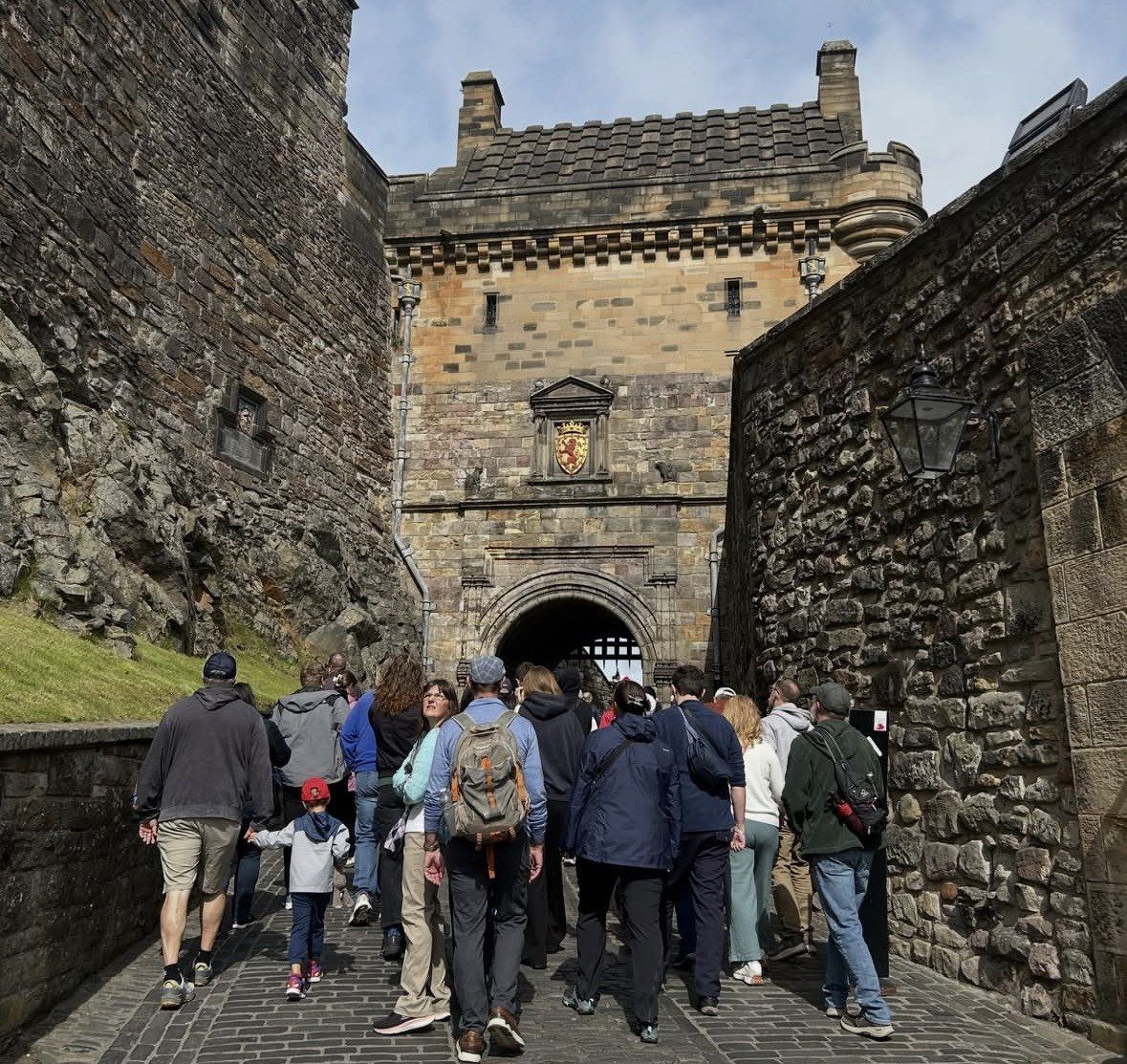
The castle changed hands repeatedly during the Wars of Independence and was retaken by the Scots in 1314. The Lang Siege came in 1573, and the Half Moon Battery you walk past on the way up was built in its aftermath. Covenanter forces took the castle in 1639.
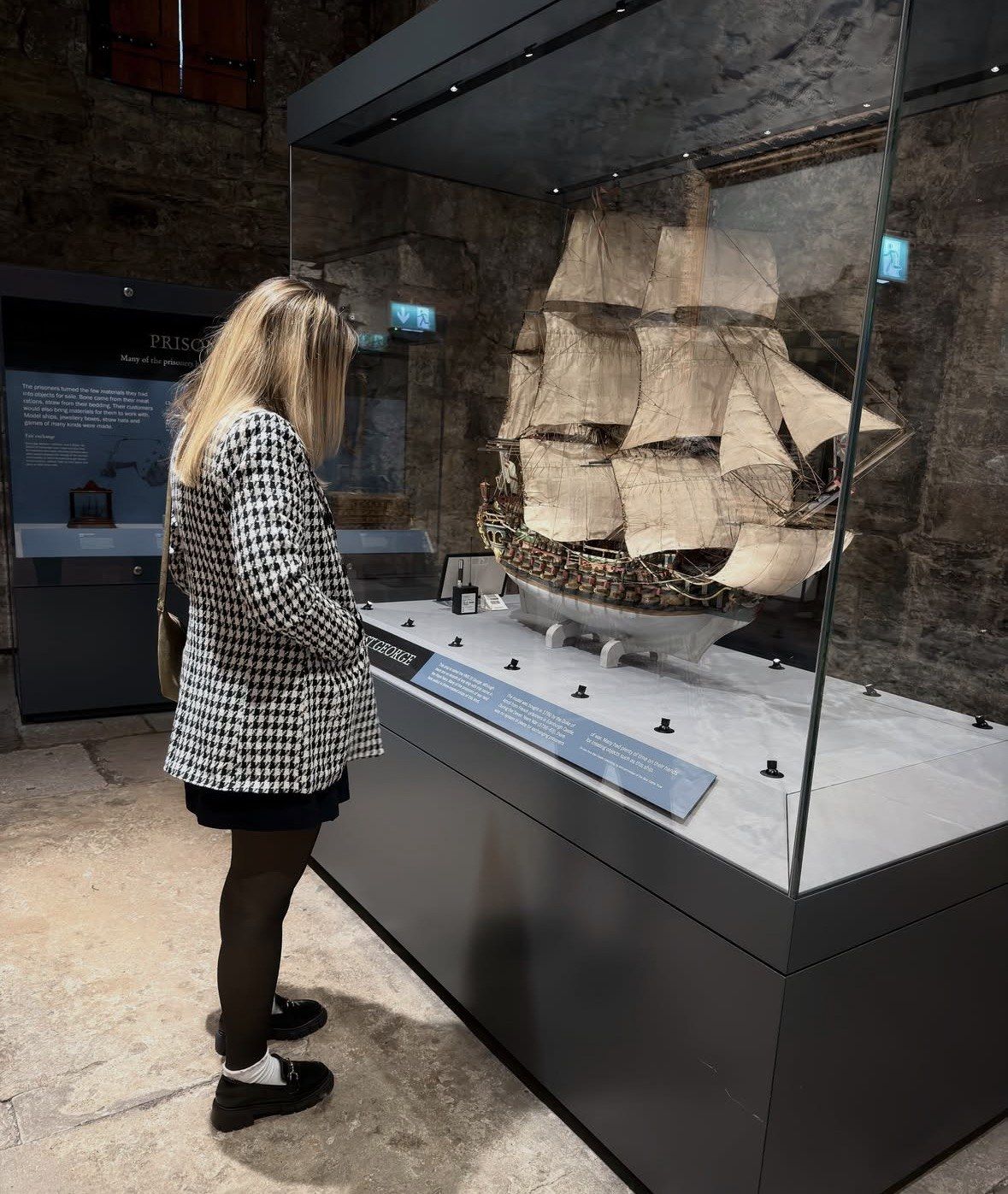
From the 1650s it became a significant military base, and the garrison period is the longest single chapter on this rock. Prisoners of war were held from 1757 to 1814 in the vaults beneath Crown Square, which had earlier housed pirates. Hundreds passed through during the 1700s and 1800s, and the interiors are presented today as a reconstruction of about 1800.
The 1pm signal belongs to the later military years. The 105mm field gun sounds at 1pm on every day but Sundays, Good Friday and Christmas Day, keeping up a practice started in 1861 to give shipping in the Firth of Forth a time check.
Who looks after the castle now
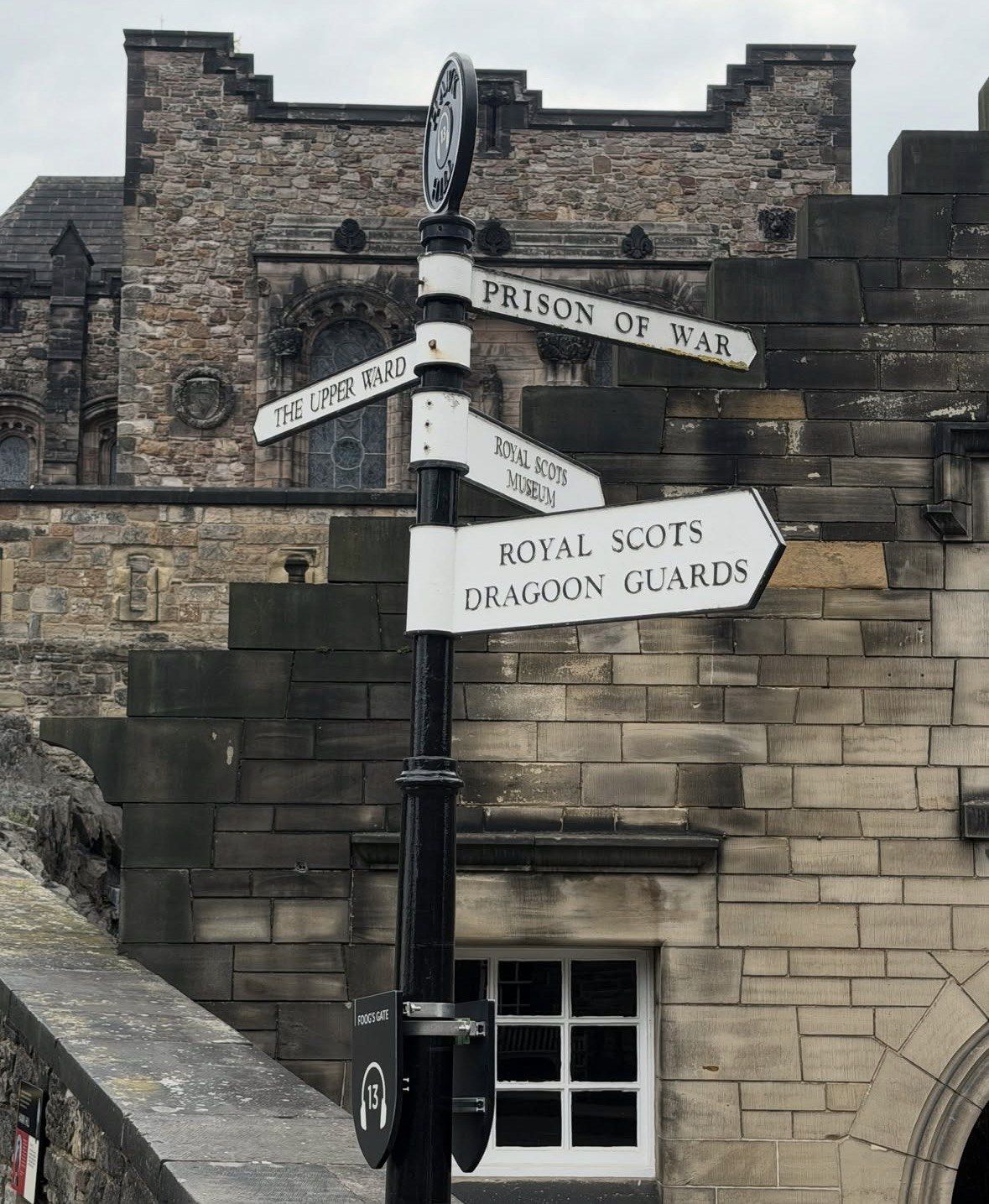
Day-to-day running of the castle sits with Historic Environment Scotland, a registered Scottish charity, number SC045925. Two institutions inside the walls are run separately: the National War Museum belongs to National Museums Scotland and is covered by castle entry, while the Scottish National War Memorial is held by an independent charitable trust that asks visitors not to take photographs and to keep respectful silence.
The museum occupies a 1700s ordnance storehouse that later served as a military hospital, and has been there since 1933 with six galleries covering 400 years of Scotland at war. Part of it is shut at present while essential building repairs go on, and its winter schedule from 1 October to 24 December runs from a 9.45am opening to a 4.30pm last entry and a 4.45pm close, earlier than the castle itself. Check on the day before you plan the final hour around it.
No official page states when the castle first opened to visitors, so that date is missing rather than disputed. What is published is the scale now: 2,044,963 visits in 2025, Scotland's most visited paid attraction and 15th across the UK, which is why the advice on every practical page is to book ahead.
Castle only, or castle plus the Old Town
To hear the dates in sequence while you look at the fabric they belong to, the 1.5 hours walk from £39 does the job: a local guide and the entry fees come with it, the rating stands at 4.9 ★ (5901 reviews), and it sets off from the Royal Mile by the statue of Adam Smith. The castle advises allowing at least two hours for the main attractions, so the guided portion covers the dates and the layers while you are walking, and your entry keeps you inside afterwards for the Crown Room, the Great Hall and the vaults at your own pace.
If the wider city story matters as much as the rock, take the 2 hours 15 minutes walk from £53, rated 4.9 ★ (2868 reviews), which pairs the castle entrance ticket and guided tour with a walk through Old Town and Royal Mile highlights. That is the better booking for anyone with a single day in Edinburgh, because the castle's chronology and the town below it developed together.
A third option suits families, small groups and anyone unwilling to tackle the climb: the private tour runs 3 to 4 hours from £245 at 4.7 ★ (18 reviews), and it covers hotel pickup and drop-off, a professional local guide and castle tickets, with food and drinks left out. Its length is the only one on this site that lets you slow down over the vaults, the memorial and the museum galleries in the same visit.
- Guided inside the walls with entry included: 1.5 hours, from £39, 4.9 ★ (5901 reviews)
- Both the castle and a walk through the Old Town and Royal Mile: 2 hours 15 minutes, from £53, 4.9 ★ (2868 reviews)
- Private, hotel pickup and drop-off, castle tickets included: 3 to 4 hours, from £245, 4.7 ★ (18 reviews)
Questions people ask
When did Edinburgh Castle first open to visitors?
No date is published for this on the castle's history page or on the Historic Environment Scotland property page, so it is a genuine gap rather than a disputed figure. What is documented is the sequence before it: a royal site from the 1000s, a Stewart ceremonial palace in the 1500s, and a significant military base from the 1650s. The visitor-site figures are modern, with 2,044,963 visits recorded in 2025.
How many sieges has Edinburgh Castle survived?
Historic Environment Scotland states that the castle has been besieged more times than any other castle in Europe, but publishes no total. Individual events are dated: the Scots retook it in 1314, the Lang Siege was in 1573, and Covenanter forces captured it in 1639. The official page gives only the year 1573 for the Lang Siege, with no start and end dates.
Is the Stone of Destiny still at the castle?
Eight things appear on the castle's own highlights list: the Honours of Scotland, the One o'Clock Gun, St Margaret's Chapel, Mons Meg, the Great Hall, the National War Museum, the Prisons of War and the Scottish National War Memorial. The Stone of Destiny is not on that list. Spend the time on the Honours, the oldest crown jewels in the British Isles. Tour descriptions elsewhere that still promise the Stone are out of date.
Which parts of the castle are actually medieval?
St Margaret's Chapel from around 1130 is the oldest surviving building on the site and the only structure with a firm twelfth-century date. The Great Hall belongs to the early 1500s, completed in 1511, and the Half Moon Battery follows the 1573 siege. Much of what surrounds them, including the storehouse that became the National War Museum, dates from the garrison centuries after the 1650s.
How much time do the historical highlights need?
Two hours is the minimum Historic Environment Scotland recommends for the main attractions, museums and vaults included. A 1.5 hours guided walk covers the chronology and leaves you inside to finish the Crown Room, the Great Hall and the Prisons of War yourself. Allow longer if you want to be in position on the battery side before the gun fires at 1pm, since that pulls you away from the buildings for a while.
Read also